|
Economic Indicators
Since the introduction of the reform and opening policy in China, the economy of Shandong Province has undergone sustained and healthy development. With an ever increasingly rationalized industrial structure, growing economic effect and profit, the provincial GDP has seen average annual growth of over 10 percent and soaring GDP per capita that now exceeds 10,000 Yuan, so that Shandong leads the country in terms of major economic indicators.
Up to now, 88.6 percent of the provincial key enterprises have been transformed into modern companies with multi-investors from different sectors. A total of 37 percent of those enterprises, approved by the State Council to transform debts into stocks, have re-registered as new companies. Ranking 4th nationally in terms of total number, over 60 companies are listed on the stock markets, with total amount of circulating stocks exceeding 10 billion shares.
Agriculture
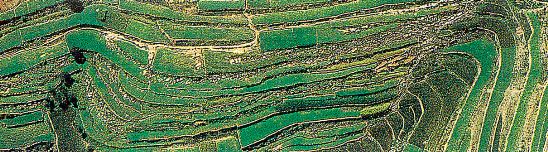
Agriculture has always been regarded as the fundamental domain for economic development in the province, and it is renowned for the greatest agricultural production value in the country. Promoting quality agriculture with high profit, and thus enriching the farmers, is a consistent goal for the province.
Shandong Province, as a well-known grain producer, has recorded an annual yield of over 40 million tons of grain for many years running. Enjoying a long history of growing cotton, it has been a major producer of cotton in China. Shandong is also the number one peanut grower in China, and more than half of the total exported peanuts from China come from the province. In recent years, as one of major vegetable suppliers to Beijing, Shanghai and other large cities, the province has made vegetables the second dominant agricultural product, earning Shandong a name as the biggest vegetable basket in the nation. It also leads the nation in fruit production, such as high quality apples, pears, peaches, apricots, Chinese dates, grapes and watermelons.
Shandong attaches great importance to forestry cultivation, giving equal weight to forest conservation and wood product development. Four major forestation systems have been constructed for mountainous areas, plains, coastal areas, townships and cities. Major trees of economic value include apple, peach, Chinese chestnut and gingko.
With a long history of stock raising and as a main producer of grain and other crops of economic value, Shandong provided an ensured development of husbandry breeding with abundant fodder, straw and other resources.
Years of development have created better infrastructure and productive conditions in rural areas as well as encouraging steady agricultural mechanization. After every village has been provided with electricity, they now have access to bus services, telephones and tap water at respective rates of 96.6 percent, 99.9 percent and 51.3 percent.
In china, Shandong has taken the lead in proposing new ideas for industrializing agriculture to create further development. Large quantities of leading enterprises have sprung up to link thousand of separate farmers with the ever-changing markets, thus accelerating the transformation from the traditional farming to modern agriculture.
Industrial System
The rapid development of industry in Shandong has, in essence, shaped a complete industrial system with such pillar sectors as primary energy, chemical engineering, metallurgy, building materials, textile and food processing. Among the 2,628 large and medium-sized industrial enterprises are such key entities at provincial level as Shandong Electric Power Group, Qilu Petrochemical Engineering Company, Langchao Group, Jinan Steel Group, Haier Group, Hisense Group, Yanzhou Coal Mining Group, etc.
Major industrial products in Shandong are as follows: raw coal, yarn, machine-processed paper, plastic products, cement, plate glass, steel, automobiles, motorcycles, home refrigerators, air-conditioners, computers, television sets, etc. Among them, well known both at home and abroad are such household electrical appliances as Haier, Hisense, Aucma, Little Duck and other products like Langchao servers, Qingqi motorcycles, etc. Trades in the top five in terms of profit within the province include natural gas, electric power, foodstuff, chemical products and textile.
Market System
Shandong has increasingly booming markets in both the urban and rural areas. Listed here are some of comparatively large-scale shopping companies: Sanlian Home Appliance Company, Qingdao National Products Co. Ltd., Jinan Silver Plaza Shopping Center, Qingdao Oriental Trade Center, Jinan DaguanYuan Mart, Yantai Company of General Merchandise, Yantai Hualian Mart, Shandong Zibo Hualian Mart, Zaozhuang Company of General Merchandise, Linyi Lunan Commercial Center, Jining Hualian Mart, Weihai Hualian Mart, etc. With their convenience, reasonable prices, and varieties of commodities have won special favor among urban residents. The currently well-known supermarkets in the province include RT-Mart and Wanjialong in Jinan and Carrefour in Qingdao. Perceiving the optimistic potential market in Shandong, many of the world-renowned retailers, such as Wal-Mart of USA and Carrefour of France, have invested in Jinan, Qingdao and other cities. Besides, Shandong has restored and cultivated a number of shops that enjoyed great reputation for their traditional name brand, among which are Jufengde Restaurant, Ruifuxiang Silk Shop, Hengdeli Clock&Watch Shop, Taikang Food Shop, Jingyi Optician's, Hongjitang Chinese Medicine in Jinan, and Company of National Products in Qingdao.
"Holiday Consumption" has become a new focus. The three seven-day holidays for the Spring Festival, May Day and National day have encouraged a consumption boom in the province, bringing about an increase in retail spending respectively of 12 percent, 11.4 percent and 11.5 percent. "Holiday Consumption" has boosted, to a greater extent, not only the wholesale and retail business sectors, but also the catering services and the transportation industry.
Financial System
Finance and insurance services in Shandong have developed very rapidly, having formed a banking system that has the People's Bank of China as the central bank, the state-run commercial banks as its principal parts, non-profit finance separated from commercial finance, and a variety of financial organs coexisting and developing.
Among those institutions, all the state policy banks and state-run commercial banks have branch offices in Shandong, as have all 10 business banks following a shareholding system that provide a nationwide service. Also established in the province are Yantai Housing Savings Bank, eight city commercial banks and 2,119 rural credit cooperatives. Thus, a banking system has been formed with relatively comprehensive institutions and complete functions. |
 |
Foreign banks have seen great potential in the provincial financial markets. In Qingdao alone, the HongKong and Shanghai Banking Corporation, Yamaguchi Bank of Japan, Standard Chartered Bank PLC and Qingdao International Bank have established branches, and Chartered Bank of HongKong, Citibank from USA, Hong Kong Posang Bank have set up their offices.
To meet the demand of opening to the outside world, foreign exchange operations have been introduced by the Bank of China, China Construction Bank, Communications Bank, CITIC Industrial Bank, Everbright Bank, International Trust and Investment Corporation and other financial institutions.
As a province of great economic scale and a large population, Shandong is favored by insurance companies both at home and abroad who are competing fiercely for a share of a market that is diversifying and growing rapidly.
By the end of 2001, a total of 13 insurance companies had begun operations in province, including China People's Insurance Company, Ping'an Insurance Company and other companies of provincial level or of cities, which submit their plans for development directly to the central government.
With the fast growing long-term capital market operating mainly on stocks, bonds and futures, the whole financial market system is being perfected gradually. Now there are three stockjobbers, 112 sales departments, 24 service units, which have total capital assets of 28 billion Yuan. There are 10 futures companies, which help the futures market to develop in a healthy, orderly and normal way.
Private Economic Sector
Recent years have seen the steady, speedy and healthy development of the private economic sector. The gross economy has grown with steady steps for the synchronous improvement in terms of both speed and benefit. In particular, there have been remarkable achievements of quality. By the end of 2001, there were nearly 80,000 privately run companies of limited liability, amounting to 50 percent of all enterprises of the provincial private sector. The added value realized by the private sector took up 32.6 percent of the provincial GDP, while it achieved direct exports worth US$2.1 billion, an increase of 41 percent from the previous year.
GDP
According to the preliminary calculation: in 2001, the province??£¤s GDP reached 943.83 billion yuan, which, calculated at a comparative price, is 10.1 percent higher than that in the preceding year.
Agricultural output value
In 2001, the annual added value of agriculture, forestry, animal husbandry, and fishery was 135.95 billion yuan, 4.2 percent more compared with the preceding year, of which, 82.35 billion yuan were from agriculture, a growth of 4 percent; 3.53 billion yuan were from forestry, a growth of 5.5 percent; 28.93 billion yuan were animal husbandry, a growth of 7.4 percent; and fishery, 21.14 billion yuan, 1.4 percent down. The ratio of each of the different sectors of agriculture, forestry, animal husbandry and fishery was: 60.6 percent, 2.6 percent, 21.3 percent and 15.5 percent respectively.
Industrial output value
The province's industrial production grew rapidly. In 2001, the sales of large-scale enterprises reached 914.6 billion yuan, having obtained an added value of 290.84 billion yuan, 14.8 percent over the preceding year.
People's living standard
In 2001, the average annual per capita disposable income of the province's urban citizens reached 7,101.1 yuan, an increase of 9.4 percent over the preceding year. The average per capita consumption expenditure of urban citizens in the year was 5,252.4 yuan, an increase of 4.6 percent over the preceding year.
The average annual per capita net income of rural residents in the province was 2,659.2 yuan, an increase of 109.6 yuan over the preceding year, a growth rate of 4.3 percent. The average per head consumption expenditure of peasant was 1,770.4 yuan, an increase of 90.7 yuan, 5.4 percent more than the previous year. |

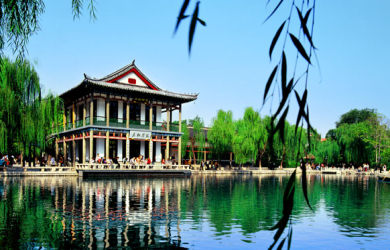 State; Penglai, the well known "fairyland on earth"; Mount Laoshan, a sacred land of Taoism; Weifang, the "world capital of kites"; Qingdao, a charming coastal city famous for its annual International Beer Fair; Yantai, known worldwide as a wine producer; Rongcheng, a place considered as "the edge of the world" by ancient Chinese; Jinan, the provincial capital honored as "the city of springs"; and the site for watching the wonderful scene of the torrential Yellow River running into the sea.
 Mount Tai, in the central part of Shandong Province, is well known for its intoxicating beauty and unique cultural content. UNESCO has included the mountain, also known as the "soul of the Chinese nation", into its list of World Heritage of Nature and Culture.
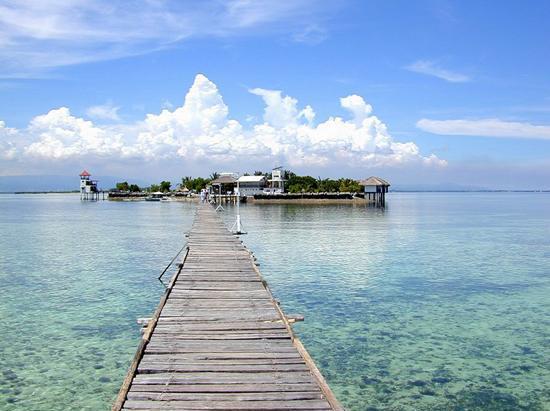 Qingdao, a coastal city known worldwide, is also located in Shandong. As one of the major business coastal cities in China, it is where Tsingtao Beer is produced. European-style architecture and newly built State tourism vacation areas in the city all have unique charm.
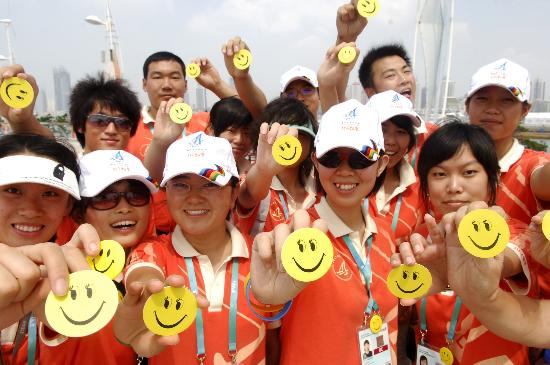 end of 2001, there were 348 star-rated hotels, 1,050 tourist services, and 41 car/boat hire companies in the province. In addition, various tourist cities have built their own high-class hotels, supermarkets and recreational facilities creating a sound environment for receiving visitors.
 They include study, folklore and calligraphy tours, which are all well received by tourists.